
We help Children & young people with ASD or other social challenges, make and keep friends with confidence.


For the children & young people aged 8–16 who feel left out, overwhelmed, or unsure how to join in.
For parents who want their child to belong - without changing who they are.
In everything we do, we believe every child and young person deserves to belong, to be seen, and to be given the tools to thrive. We hope to see a world where no child or young person would have to stay on the sidelines, because they didn't have friendship skills -as these skills, like any other skill, can be learnt.
We challenge the idea that friendship skills are optional extras, or personality traits. We think differently by using simple, evidence‑based programmes that turn learning into play, and practice into confidence.
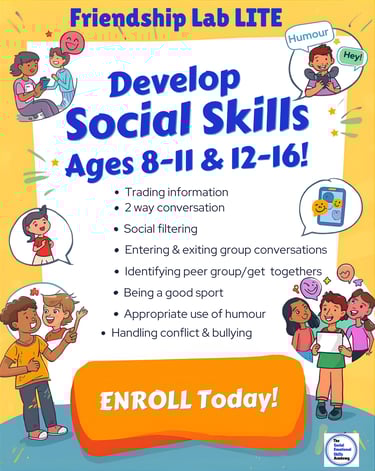
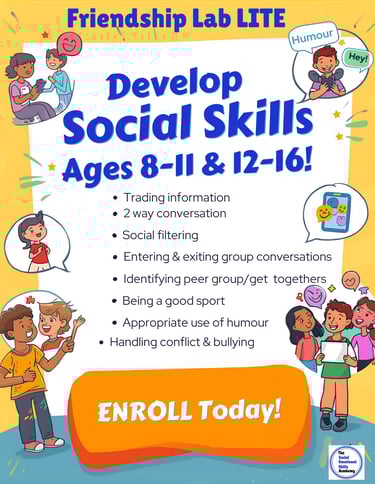
In our Academy, we help individuals develop the skills necessary to make meaningful connections with peers which increase their confidence. We help children and young people, between 8-16 years, who may be neurodivergent and or those who simply struggle to navigate the very confusing world of social interactions. We give them the tools to find, connect, communicate, and make friends which can carry on into everyday life.


Are you noticing any of the following with your child or young person?
Difficulty making friends or being left out of social invitations.
Signs of anxiety, low mood, or possible bullying at school.
Losing motivation to form or maintain friendships because socialising feels unsuccessful
Excessive time spent online or gaming that interferes with daily life.
Increasing social withdrawal or refusing to attend school.
Neurodivergent children & young people perceive the social world differently and so find social situations challenging, making social anxiety common.
What we do
At the Academy, children & young people learn how to:
• join in without fear
• read social clues
• manage overwhelm
• build confidence
• make and keep friends
Gently. Joyfully. At their pace.
We believe friendship skills are not optional extras but need-to-have skills that children and young people need now and in the future to thrive in the world.
We provide opportunities for social skills coaching through courses and workshops which are delivered through online sessions, which allows children and young people to join in from the comfort of their homes, to improve on their friendship skills.
If your child struggles with friendships, you’re not alone.
Some children pick up friendship skills naturally.
Others need them broken down into clues, scripts, and steps.
That’s not rudeness.
That’s a learning style.
And it’s teachable.
How It Works (Simple as 1–2–3)
1. We understand your child’s social world
Their strengths, challenges, and the moments that feel hardest.
2. We teach the skills that build real friendships
Through play, practice, coaching, and emotionally safe guidance.
3. We help them use those skills in real life
So friendships stop feeling confusing - and start feeling possible.
Your Next Step
You don’t need to figure this out alone.
We’re here to help.
What we believe
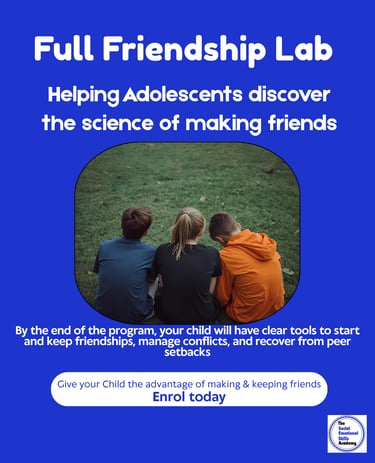
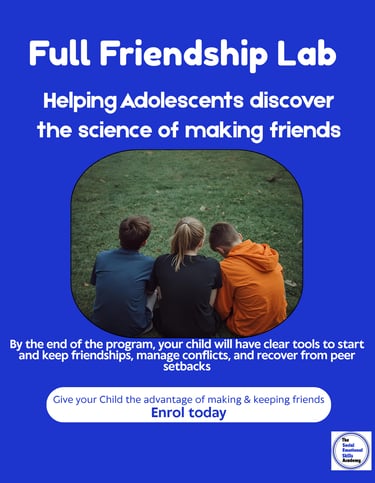
Full Friendship Lab
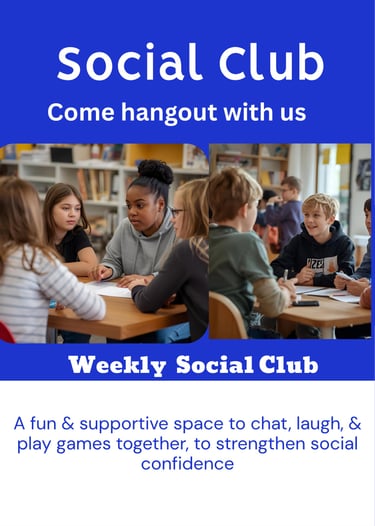
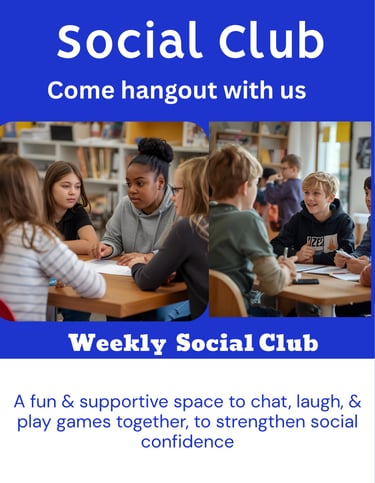
Weekly Social Club
Courses and workshops